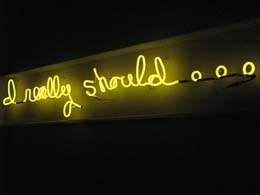
 Why, hello, stranger. Today I realized that it has been five weeks since I wrote a blog post. Five. Even though my intensive reschooling period ended in June, I have intended to keep blogging at least once per week. As usual, I have a lot of things I would like to write about on the topic of reschooling. But I haven’t been writing on the blog at all, and in my mind, this means I’m failing.
I think the main reason for my absence from the blog is that I’m frustrated by the feeling that I “should” be blogging. The feeling of obligation nags at me every day, when I read other people’s blogs that update frequently. I think about all that I should do with Reschool Yourself: update the blog, publicize it, monetize it, build a widespread readership for it, and write a book based on it.
And so on. Keep in mind that these are just the Reschool Yourself shoulds, and that I have a lot more of them clogging up my brain, related to my health and household and career in general. It’s so overwhelming that it makes me want to crawl into bed and sleep instead of doing anything.
Sometimes I stop and ask myself, “For what? Why would I do all of these things?” Asking these questions is a good habit to get into when you feel a “should” coming on. Sometimes the answer is hard to discern, especially when you’re used to doing what you think you should and can’t separate it from what you actually want.
 I feel fortunate to have a lot of choices in my life. I would like to be grateful for these opportunities and use them well, instead of doing things out of obligation and then resenting them. My goal is to stop “should-ing” — and instead, to do things purely because they bring me closer to what I want out of life.
Early last year, I wrote about banishing “should” from my vocabulary and replacing it with “could” or “want to.” For example:
The statement “I should see the movie ‘An Inconvenient Truth,” makes me feel ashamed for not having seen it yet. If I were to see it, it would be less of a choice than the fulfillment of an obligation. (“I need to” or “I have to” has the same effect.)
On the other hand, “I could see the movie ‘An Inconvenient Truth’,” or “I want to see it” makes me feel excited by the possibility, and free to choose whether I do or not. I could see “Ernest Goes to Jail” instead. It really depends on what I want to do.
For the most part, over the last year I have stopped using the word “should,” and it’s made a big positive difference for me. During those rare situations when it’s the only word that seems to work, I use “should” intentionally and sparingly.
The more difficult challenge is teaching my mind to stop “should-ing.” Even when I don’t say the word out loud, the little voice in my head tells me that I should hang up my clothes instead of tossing them onto the floor, call the friend whom I’ve been meaning to catch up with, and keep up with current events every day. It reminds me of the things I should have done a long time ago. All the time.
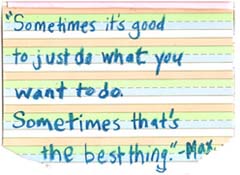 In truth, there is no “should.” I invented it for myself, and I’m the one using it to make myself feel bad.
I started Reschool Yourself in order to learn to do what I want to do, and do it. I’m still learning. When faced with the daily shoulds, I’m learning to ask myself:
- Do I want to do this?
- Will I enjoy it?
- Will it bring me closer to my most important goals?
Because if the answer is no, I don’t think I should do the thing at all.
Of course there will be tasks that I don’t particularly want to do at the moment, but I do them anyway because they contribute to something that I want overall. I kept going back to my old schools last fall even when it was painful, because I knew intuitively that the experience was important for my healing process. Sometimes I’ll go to sports events or action movies with Darren, because it’s important to him that I go, and he is important to me. Ultimately, I want to do these things. But there are other things that I agree to because I think I should, in order to please people or look good for them in some way, and I usually end up stressed out and complaining about them.
Sometimes sorting out my reasons for doing something makes me see it as an exciting opportunity instead of the obligation that it could otherwise be. This blog, for example: I enjoy it, at least when I do it for my own reasons, on my own terms. I enjoy blogging because I like to write, and I like to share what I’ve learned. I know that my experiences have helped readers cope with the same issues of perfectionism, insecurity, and achievement that I do. It makes me happy to help people.
On the other hand, I can’t find motivation to blog because readers need to see new content regularly in order to stay loyal, or because the site could earn me a living if I grew the audience. I know that I won’t be excited about writing a book just because I said I’m going to. If I let these reasons drive my actions, the writing I produced wouldn’t be authentic.
So while I could blog regularly, and I would like to, I might not do it. I’m learning to be OK with that. Because it would be a little ridiculous if the very tool I’m using to stop “should-ing” became just another “should.”
When I ask myself the question, “What am I doing this for?” I want the only acceptable answer to be, “Because I want to.”
Your Two Cents: Leave a Comment!
What are some of the shoulds you’d like to stop?
You were the first person to teach me to remove the words “should” and “try” from my vocabulary, and to replace them with “will”, as in “I will Skype wth Melia soon.” It’s made it easier to get things done, because saying “i will” do something implies that it is already expected to happen, and sometimes that’s the hardest part to get to for me.
And Ernest goes to camp is my favorite. By far. Ewwwwwwwww!
Good for you for using “should” less. It’s like a nervous tick for me. It’s amazing how often I say “I should… [insert guilty statement here]” and beat myself up about how I’m not blogging enough, taking dance classes, learning Spanish, curing cancer. It puts a lot of pressure on myself to be productive and self-improving all the time, which kinda takes all the joy out of doing things I like (and makes me feel more guilty when I opt to watch four episodes of “Grey’s Anatomy” instead). Thanks for this post.
I, too, haven’t blogged in over a month or added more recipes to Feed the Empire, but I will eventually… because I want to. Thanks for the reminder 🙂
I know we all use ‘should’ in un-mind-ful ways, and especially as a way to admit that we know what we should be doing according to others, but … we’re too cool or we can’t be bothered. I don’t really understand why this is so ‘au courant’ with our generation and our crowd, because the frequent use of ‘should’ in this way really contributes to a culture of meaningless intentions. Overall, this devalues real intentions. It’s like intention inflation! Save it for the real deal, and you’ll be happier, just as Melia knows.
Post script: I just watched Lost Boys of Sudan (2002-ish documentary), where I was reminded of the many things our capitalist society says we “need” or “should do/have” that are complete B.S. We need a purpose and a way to contribute to our community, that is the ‘real’ intention, in my mind, and ultimately what will make us happy.
Stephen, yes, let’s Skype soon! I tend to use “Let’s” instead of “We should,” which automatically makes the proposed activity sound more fun. It’s an offering, not an obligation. “I will” is definitely a way to commit fully, instead of voicing the meaningless intentions that Margaret is talking about.
Gill, I know exactly what you’re talking about. I should keep up my Spanish, I should play my digital piano more because I lugged the thing across the country…so when I actually do these things, I’m just fulfilling the obligation and forget that I actually enjoy them. I’m sure Grey’s Anatomy was totally worth it, and you can feel productive because you’re catching up with the current season! Me too. 🙂 As far as the blogging, Darren points out to me that people will read and enjoy what I write when I write it; they’re not judging me when I don’t write it. And anyway, it doesn’t really matter if they are.
Margaret – “intention inflation,” well said. I agree that when we’re reminded of the things we really need in life — safety, health, and love, for example — “needing” to go run errands or buy a new gadget doesn’t seem quite so urgent after all. It makes us use the word more selectively, and take responsibility for our choices.
I read both Dickers’ blogs regularly (maiden and last name), and the Empire, and I’m not going to stop reading the blog or checking for new posts because you’re busy living life, hopefully having a blast!
Unfortunately, reverse psychology works best on me so “wills” usually back fire and “shoulds” can do some wonders.